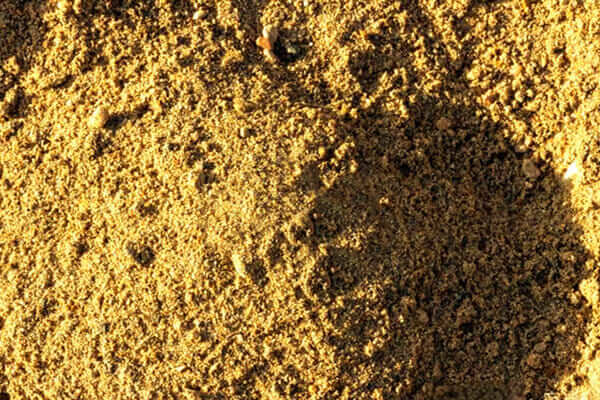
The river sand washing process involves sieving to remove large impurities, mechanical scrubbing (using spiral or wheel bucket washers) to separate clay and silt, high-pressure water rinsing for fine particle removal, and dewatering (via vibrating screens or centrifuges) to reduce moisture content, ultimately producing clean sand with ≤3% clay content while recycling water and minimizing environmental impact through sedimentation and filtration systems.
River sand is a naturally occurring granular material composed of finely divided rock and mineral particles, typically extracted from riverbeds or banks. It plays a vital role in construction and other industries due to its physical properties.
Key Properties
Texture: Fine to medium-grained, smooth, and rounded due to natural water erosion.
Composition: Primarily silica (quartz), with traces of feldspar, clay, and organic matter.
Color: Usually light brown or gray, varying by location.
Gradation: Well-graded particles, ideal for filling voids in construction mixes.
Common Uses
Construction
Concrete: Provides strength and workability as a fine aggregate.
Mortar: Binds bricks/blocks smoothly due to its fineness.
Plastering: Delivers a smooth finish for walls/ceilings.
Landscaping
Used in gardens, pathways, or artificial beaches due to its aesthetic appeal.
Other Applications
Filter media in water treatment.
Brick manufacturing and ground stabilization.
Mineral Processing
River Sand Cleaning And Washing Process
River sand often contains mud, silt, and organic impurities, requiring washing to improve its purity to meet the requirements of construction, concrete, and other applications. The washing process generally includes steps such as crushing, screening, washing, and dewatering, with the core objective of reducing the mud content (≤3%) and ensuring a reasonable particle size distribution.
Cleaning & Washing Process
The following is a typical production line process for river sand washing:
(1) Raw Material Pretreatment
Coarse Screening: Use a bar screen or vibrating screen to remove large stones, branches, and other debris. Crushing (Optional): If the sand source contains a lot of pebbles, a jaw crusher or cone crusher is needed for preliminary crushing.
(2) Screening and Grading
Drum Screen or Vibrating Screen: Grade the sand according to particle size (e.g., 0.075mm, 0.6mm, 2.36mm, 4.75mm, etc.). Fine sand (<0.6mm) usually has a high mud content and requires intensive washing.
(3) Sand Washing and Mud Removal
Common Equipment
Bucket Wheel Sand Washer: Separates mud by stirring the sand-water mixture with a rotating impeller. Suitable for medium-scale production, but it consumes a relatively high amount of water.
Spiral Sand Washer: Uses spiral blades to push the sand while clean water washes it in the opposite direction. Energy-saving, suitable for sand with low mud content.
Hydrocyclone: High-speed centrifugal force separates fine sludge (<0.075mm), suitable for fine cleaning.
(4) Dewatering and Recycling
Dewatering Screen: Vibrating screen + spray water, reduces the moisture content of sand (~10%). Fine Sand Recovery Machine (e.g., hydrocyclone + dewatering screen): Recovers fine sand smaller than 0.075mm, reducing waste.
(5) Tailwater Treatment
Sedimentation Tank: Clean water is recycled after sludge sedimentation. Filter Press (optional): Treats sludge, reducing environmental pollution.
JXSC's River Sand Cleaning And Washing Process
This setup is a river sand wash plant, it is configured with a trommel screen, wheel sand washer, fine sand recycle machine, and conveyor belt.
River Sand Cleaning And Washing Process Flowsheet Explanation
The excavator feeds the river sand to the hopper of the trommel screen. The trommel screen is designed with a two-layer screen. The screen mesh is 2 mm and 5 mm.
After trommel washing, the sand will be separated into 0-2 mm, 2-5 mm, and larger than 5 mm. The larger than 5mm will be sent to a stockpile. And 2-5 mm will be sent to another pile by conveyor belt.
The 0-2 mm will flow to a wheel sand washer to wash, and then flow to the fine sand recycle machine.
The tailing of the wheel sand washer and underflow of the cyclone of the fine sand recycling machine will flow to one pool and then be pumped to the cyclone to recycle. Then the fine sand can be recycled.