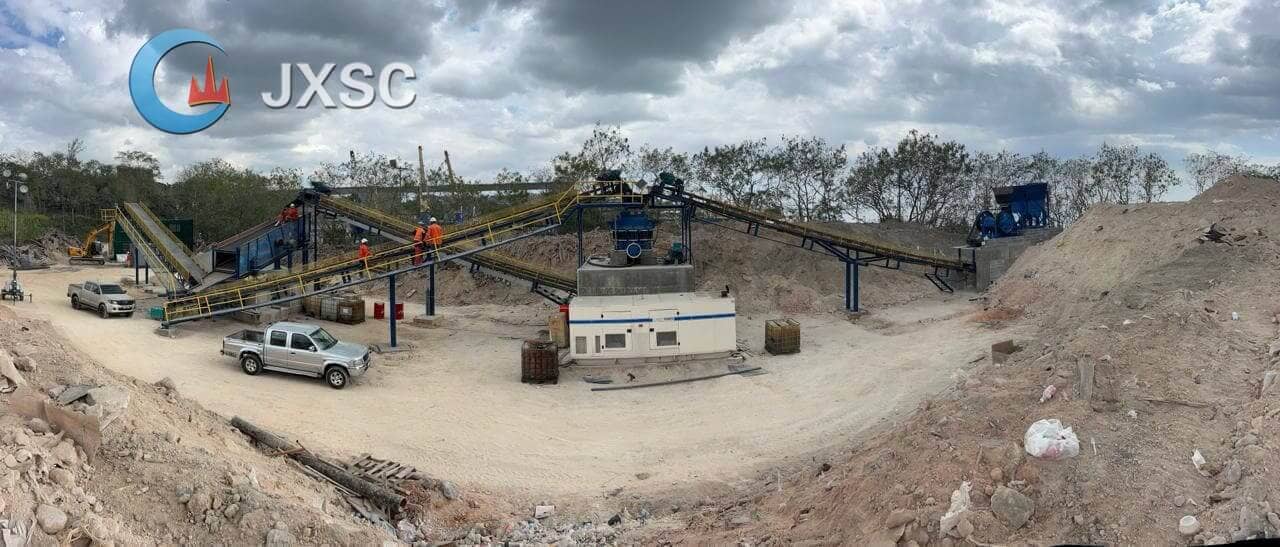
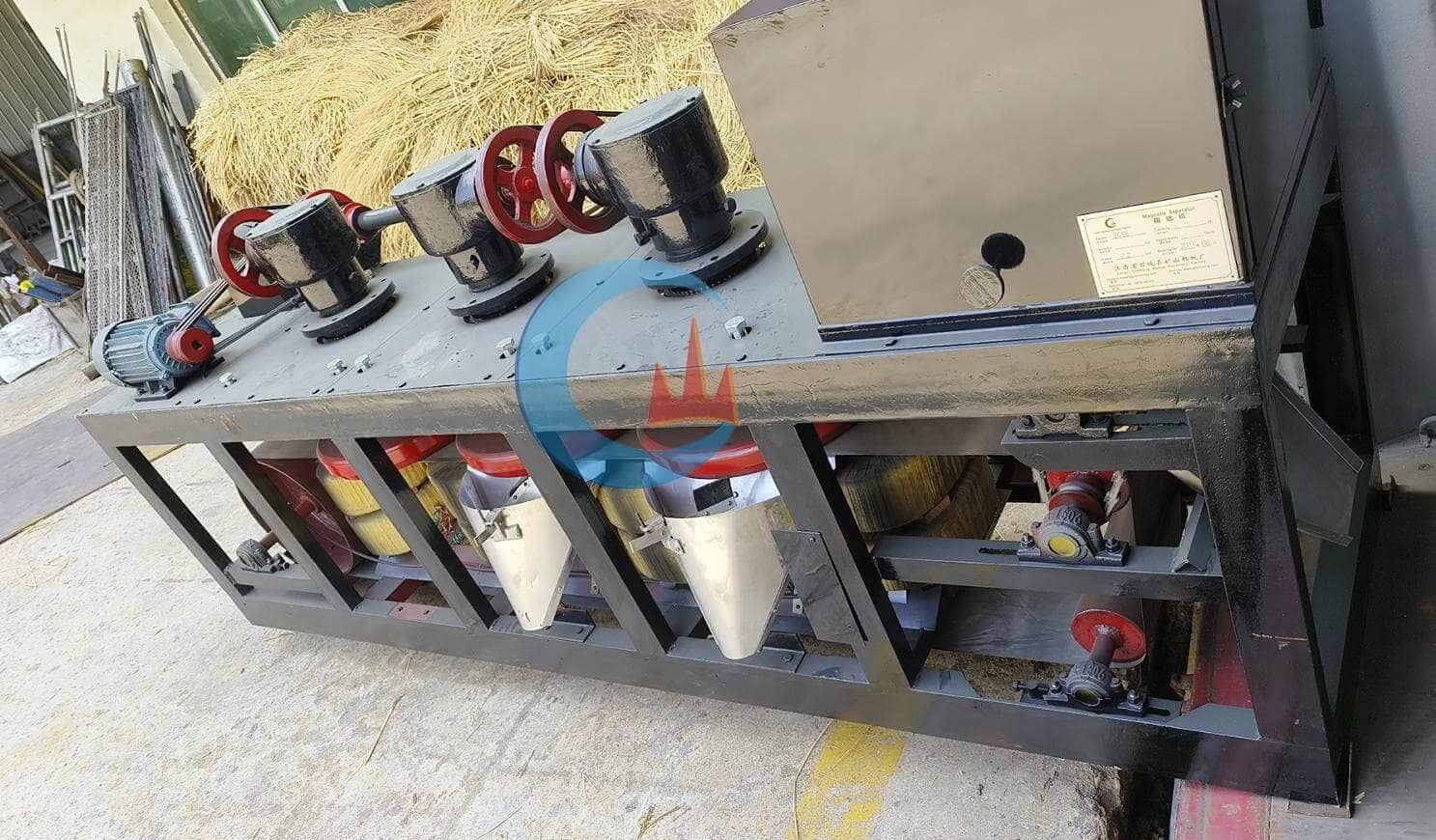
JXSC has provided a successful 120TPD lithium ore processing plant in Nigeria in 2023. We designed the processing plant flowchart and plant layout drawing in accordance with the client’s requirements. We provided a complete set of plant machines and sent the engineer to the mine site.
EPCS
Engineering, Procurement & Construction Services
Case Study: Spodumene Lithium Ore Processing Plant Project
Project Overview
Minerals
Spodumene Lithium Ore
Capacity
120 TPD
Feed Size
≤200 mm
Location
Nigeria
Project Process
Solutions & Process
We successfully designed and delivered a comprehensive 120TPD lithium ore processing facility for our Nigerian client in 2023, providing a complete solution that includes feeding, crushing, grinding, a mud-water removal system, flotation, and lithium concentrate dehydration systems, along with all necessary auxiliary equipment.
The client, a local mining company engaged in small-scale hard rock lithium extraction, needed a reliable, efficient, and user-friendly processing solution. Our customized plant was engineered to process spodumene ore with 2% Li₂O grade and a maximum feed size of 200mm, while ensuring easy future expansion to 200-240 TPD for anticipated production growth.
Key highlights of this project include:
- Modular design enabling smooth capacity upgrades
- Optimized equipment selection for high recovery rates and low operating costs
- Simplified operation for small-scale mining conditions
- Adaptability to fluctuating ore characteristics for long-term viability
This successful deployment demonstrates our expertise in delivering cost-effective, scalable mineral processing solutions tailored to African mining operations.
Process Flowchart

Process Design Solution
Based on the client’s requirements, JXSC designed an efficient processing flowchart:
1. Feeding &Crushing System: work 12H/D, 10TPH Input Capacity
We use a chute feeder for feeding raw material(below 210mm) to the primary jaw crusher stably and evenly. There are two-stage crushers in the crushing system, including a primary jaw crusher &fine jaw crusher for crushing returned material.
The primary jaw crusher is for primary crushing big stones to below 40-100mm, then the output from the primary jaw crusher will go to the fine jaw crusher for secondary crushing.
The output from the primary jaw crusher is below 40mm, which will go to the vibration screen (with one deck 20mm mesh size), screen out 0-20mm fine material, go to the stockpile on the ground, and +20mm go to the fine jaw crusher for crushing again.
2. Ball Mill Grinding System: work 24H/D, 5TPH input capacity
The electromagnetic vibration feeder is fixed under the transfer bin. Then, feed 0-20mm fine ore smoothly to the ball mill through a belt conveyor. The ball mill is for grinding material to a very fine powder, 200 mesh, to ensure the liberation of LiO2 as much as possible from Spodumene and Lepidolite ore, so the next flotation separation can get the best recovery ratio.
For Spodumene ore, usually need to grind the final product 200mesh, which occupies 75-80%, for Lepidolite ore, need to grind the final product 120mesh occupy 60-70%. So to get those fine powder sizes, the ball mill needs to work together with a spiral classifier, overflow of classifier will be the 100-200mesh fine slurry, the underflow coarse particles will go back to the ball mill to grind again, to form a closed grinding circuit. So, from this grinding system, we will get the required 200mesh slurry.
3. Mud Water Removing System: work 24H/D, 5TPH input capacity
After grinding the raw material to 100- 200mesh fine powder, there will always be some mud and clay in the slurry, especially with the lepidolite ore; the mud will influence the flotation effect, so we’d better remove the mud before the material goes to the flotation process. We will add the mud water removing system after the ball mill, before flotation.
Usually, we use small-sized hydrocyclones, that shows in our flowchart. The overflow from cyclones is muddy water, which will go to the tailing pond. The underflow from cyclones is the material we need, which will go to the mixing tanks of the flotation processing plant directly.
4. Flotation System
After the mud water removal system, the 100-200mesh slurry will first be sent to two mixing tanks for mixing material and related chemicals completely, then the material from the mixing tank will go to the flotation machines directly. The chemicals shall be according to the type of lithium ore; chemicals for spodumene and lepidolite are different.
The flotation processing includes roughing flotation & scavenging flotation & cleaning flotation.
- Usually, roughing flotation is ONE time with a 4-cell flotation machine.
- The concentrate ore from roughing flotation will be processed again by another two or three times cleaning flotation, with a total of 5-8 cells of flotation machines, so can get higher grade Li2O can be obtained.
- Tailings from roughing flotation will also be processed by another two times scavenging flotation process, a total of 8 cells of flotation machines. In this way, it can increase the Li2O recovery ratio and make the Li2O concentrate output as high as possible.
So after the flotation process, we will finally get high-grade Li2O. The flotation system can be adjustable according to material real conditions and customer requirements.
5. Li2O Concentrate Ore Dewatering System
After getting the Li2O concentrate ore from the flotation system, it is mixed with water, so need to be dewatered. Because the size is very small, fine 200mesh, so firstly use thickener to primary thicken concentrate, make higher density, then use disc vacuum filter machine to filter water, and dry Lithium concentrate ore with very low moisture, then can go to packing system by belt conveyor.
The water from the thickener and the vacuum filter can all be reused to process the plant.
Please note: about the tailing treatment, if the customer needs the tailing dry discharged, then they need to add tailing thickener and plate filter press to filter & dewater tailing. We also have tailing dewatering equipment. If the customer needs, we can also provide them.
If the customer doesn’t have this need, just use a tailing pump to send tailings to the tailing dam.


Customer Questions & Our Answers
1. If we need an engineer, how many days do we need, and how much?
If the buyer needs JXSC to send an engineer to the mine site for installation & commissioning guidance, they need the following extra cost:
- The engineer’s salary is $150/day/person; installation time depends on the customer’s mine site preparation conditions.
- Round-trip ticket cost
- Visa application cost
- Any other potential cost before or after the installation period, such as hotel cost, waiting for a flight, etc
- Arrange food
Generally, it takes 1-2 months, and we recommend sending two engineers.
2. Why crushing and separating part working only 10hours?
The fact that the crushing process only takes 10 hours is likely the result of a combination of factors. These include the design of the crushing process, the characteristics of the ore, the efficiency of the equipment, and the requirements of the final product. To ensure the efficiency and cost-effectiveness of the crushing process, ore processing plants typically employ optimized design schemes and high-efficiency equipment, and follow the principle of multiple crushing stages and less grinding. If the crushing process takes too long, it may indicate the need to adjust and optimize the crushing process or equipment to improve efficiency and reduce costs.
3. Why need to use a ball mill machine not use hammer crusher?
Ball mills can grind materials down to 200mesh, hammer crushers can crush materials to below 2mm. In a lithium process plant, before going to flotation, need keep the material about 70% to get 200mesh.
4. Why does the ball mill machine need to use a spiral classifier?
Spiral classifier can keep the output size from the ball mill to be 200mesh, the underflow will return to the ball mill to grind it again, to get the 200mesh size.
5. If we don’t use a hydrocyclone, will it be ok?
In lithium ore flotation, not using a hydrocyclone after ball milling leads to a series of negative consequences, including uneven particle size distribution, increased wear on flotation machine impellers, increased reagent consumption, and reduced flotation recovery rate. Therefore, the hydrocyclone is an indispensable piece of equipment in the lithium ore flotation process, and it is crucial for ensuring flotation efficiency and product quality.
6. Could you tell me the approximate water consumption?
Yes, for a 120tpd capacity lithium process plant, water consumption is about 300tpd.
7. Why is there no tailings treatment system?
Because this client wanted to save costs, our engineers designed a tailings pond and sedimentation tank based on his processing volume. This allows him to effectively treat the tailings using these sedimentation facilities.


Equipment In This Project
Related Cases
We are a leading provider of innovative and efficient mining equipment and solutions. With years of experience in the industry, we specialize in designing and manufacturing high-quality machines tailored for various mineral processing needs, including gold, diamond, copper, tin, manganese, chrome, titanium, and other ore separations. Our commitment to technology and customer satisfaction drives us to deliver customized solutions that enhance productivity and ensure environmentally sustainable practices. Explore our extensive portfolio of successful case studies and discover how JXSC can transform your mining operations, helping you maximize your profitability while minimizing your ecological footprint. Choose Us—where technology meets efficiency in the world of mining!