
Slurry pumps are built to operate in some of the harshest industrial environments. They transport abrasive mixtures of liquids and solid particles that would quickly damage conventional pumps. Despite their rugged construction, slurry pumps generally require more maintenance and experience more frequent failures than standard water pumps.
This doesn’t mean slurry pumps are poorly designed. Rather, they operate under far more demanding conditions. Every hour of operation exposes the pump to abrasive particles, corrosive chemicals, hydraulic forces, and heavy mechanical loads that gradually wear down internal components.
Understanding why slurry pumps fail more often begins with understanding how they are designed, how they work, and the engineering principles that govern their operation.
What Is a Slurry Pump?
Definition
A slurry pump is a heavy-duty centrifugal pump specifically designed to transport slurry—a mixture of liquid and suspended solid particles. Depending on the application, the slurry may contain sand, gravel, coal, mineral ore, ash, tailings, or other abrasive materials.
Unlike clean water, slurry has a much higher density and often contains hard particles that continuously impact the pump’s internal surfaces. This makes pumping slurry significantly more challenging than pumping water.
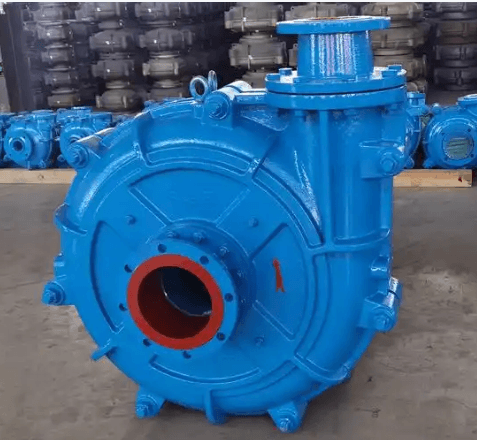
Slurry Pump vs. Water Pump
Although both slurry pumps and standard water pumps use centrifugal force to move fluids, their designs differ considerably.
A water pump is intended for relatively clean liquids with little or no solid content. Its components are optimized for hydraulic efficiency, compactness, and energy savings.
A slurry pump, on the other hand, is engineered to survive constant exposure to abrasive materials. Key design differences include:
- Thick, heavy-duty casings that resist erosion
- Replaceable wear liners
- Larger internal clearances to reduce clogging
- Reinforced shafts and bearing assemblies
- Wear-resistant impellers
- Robust sealing systems
While slurry pumps typically sacrifice some hydraulic efficiency, they provide the durability needed for demanding industrial applications.
Designed for Abrasive Fluids
The defining characteristic of a slurry pump is its ability to transport abrasive fluids.
During operation, hard particles strike the impeller, liners, and casing at high speed. Without specialized materials, these impacts would rapidly erode the pump.
For this reason, slurry pumps commonly use wear-resistant materials such as:
- High-chrome white iron
- Natural rubber
- Polyurethane
- Ceramic composites
- Specialized abrasion-resistant alloys
The appropriate material depends on particle size, hardness, slurry concentration, temperature, and chemical composition.
Heavy-Duty Construction
Every component of a slurry pump is designed for strength and longevity.
Compared with standard pumps, slurry pumps feature:
- Larger shaft diameters
- Heavy-duty bearing housings
- Thick pump casings
- Replaceable wear components
- Reinforced sealing systems
This robust construction allows the pump to withstand severe mechanical stress while operating continuously in abrasive environments.
Main Components of a Slurry Pump

Impeller: The impeller is the rotating component that accelerates slurry through centrifugal force. Because it experiences the highest particle impact, it is one of the fastest-wearing components in the pump.
Volute: The volute surrounds the impeller and converts the slurry’s velocity into pressure while directing flow toward the discharge outlet.
Shaft: The shaft transfers rotational power from the motor to the impeller. Heavy-duty alloy steel shafts help minimize deflection under high loads.
Bearings: Bearings support the rotating shaft while handling both radial and axial loads. Proper lubrication is essential to prevent premature failure.
Shaft Sleeve: The shaft sleeve protects the shaft from wear in the sealing area. Replacing the sleeve is far less expensive than replacing the entire shaft.
Mechanical Seal: Mechanical seals minimize slurry leakage around the rotating shaft and are commonly used in applications requiring cleaner operation.
Packing Seal: Packing seals use compressible packing rings to control leakage. Although simpler and less expensive than mechanical seals, they require periodic adjustment.
Liners: Wear liners protect the pump casing from abrasion. Depending on the application, liners may be made from high-chrome alloy, rubber, or polyurethane.
Casing: The casing forms the pump’s pressure boundary and houses all internal components. Its thick walls are designed to resist continuous erosion.
Suction Pipe: The suction pipe delivers slurry into the pump. Proper suction design helps prevent turbulence and cavitation.
Discharge Pipe: The discharge pipe transports slurry to the next stage of the process while maintaining sufficient velocity to keep solids suspended.
How a Slurry Pump Works
Although slurry pumps handle difficult materials, their operating principle is straightforward.
Step 1: The motor rotates the pump shaft.
Step 2: The shaft turns the impeller at high speed.
Step 3: As the impeller rotates, it creates a low-pressure region at its center.
Step 4: Slurry is drawn into the pump through the suction pipe.
Step 5: Centrifugal force accelerates the slurry outward through the impeller.
Step 6: The volute converts much of the slurry’s velocity into pressure.
Step 7: The pressurized slurry exits through the discharge pipe and continues through the piping system.

Why Slurry Pumps Experience More Problems Than Standard Pumps?
Conclusion
Standard water pumps typically move clean fluids with minimal mechanical wear. Slurry pumps, however, operate in environments where solid particles, aggressive chemicals, and demanding hydraulic conditions continuously attack internal components.
Several engineering factors explain why slurry pumps require more maintenance and fail more frequently.
Abrasive Wear
Abrasive wear is the leading cause of slurry pump failure.
Unlike clean water, slurry contains hard particles such as quartz, silica, sand, or crushed ore. As these particles travel through the pump at high velocity, they repeatedly strike internal surfaces.
Every impact removes a microscopic amount of material. Over millions of impacts, this gradual erosion significantly alters the geometry of components such as the impeller, volute, liners, and casing.
The severity of abrasive wear depends on several factors:
- Particle hardness
- Particle size
- Solids concentration
- Flow velocity
- Impact angle
Higher flow velocities dramatically increase erosion because particle impact energy rises with speed. Even small increases in operating velocity can significantly shorten component life.
Corrosion
While abrasion removes material mechanically, corrosion removes material through chemical reactions.
Some slurries contain acidic solutions, dissolved salts, or other corrosive chemicals that attack metal surfaces. This weakens the material and makes it more vulnerable to abrasion.
Typical corrosive applications include:
- Acid mine drainage
- Chemical processing
- Industrial wastewater
- Mineral leaching operations
When corrosion and abrasion occur simultaneously, the combined damage is often much greater than either mechanism acting alone. This phenomenon, known as erosion-corrosion, is one of the primary reasons slurry pumps require specialized materials.
Cavitation
Cavitation is one of the most destructive hydraulic problems affecting centrifugal pumps.
It occurs when local pressure inside the pump falls below the liquid’s vapor pressure, causing tiny vapor bubbles to form.
As these bubbles move into higher-pressure regions, they collapse violently. Each collapsing bubble generates a microscopic shock wave that repeatedly strikes nearby metal surfaces.
Over time, cavitation causes:
- Surface pitting
- Excessive vibration
- Loud cracking or rattling noises
- Reduced pump efficiency
- Metal fatigue
- Premature impeller failure
A cross-sectional illustration showing vapor bubble formation and collapse is recommended to explain this process.
Common causes of cavitation include:
- Inadequate suction pressure
- Blocked suction piping
- Excessive pump speed
- Poor system design
- Insufficient Net Positive Suction Head (NPSH)
Preventing cavitation requires proper hydraulic design and ensuring that the available NPSH always exceeds the pump’s required NPSH.
Improper Pump Selection
Even the most durable slurry pump will experience premature failure if it is incorrectly selected for the application.
Wrong Impeller
An impeller that is too large, too small, or unsuitable for the slurry characteristics can reduce efficiency, increase vibration, and accelerate wear.
Wrong Material
Material selection should always match the abrasiveness and chemical properties of the slurry. Using standard cast iron in highly abrasive applications often results in rapid component failure.
Wrong Speed
Operating the pump at excessive rotational speed increases particle impact velocity, dramatically accelerating erosion while increasing power consumption and mechanical stress.
Operating Away from the Best Efficiency Point (BEP)
Every centrifugal pump is designed to operate most efficiently at its Best Efficiency Point (BEP). Running significantly above or below this point causes hydraulic instability that leads to:
- Increased vibration
- Bearing overload
- Seal failures
- Higher energy consumption
- Accelerated wear
- Shortened equipment life
Proper pump selection considers not only the required flow and head, but also slurry properties, material compatibility, operating speed, and expected duty cycle.
Slurry pumps fail more often than standard water pumps, not because they are less reliable, but because they perform one of the most demanding tasks in industrial fluid handling. Every operating cycle subjects them to abrasive particles, corrosive chemicals, hydraulic instability, and heavy mechanical loads that clean-water pumps rarely encounter.
Understanding the causes of abrasive wear, corrosion, cavitation, and improper pump selection allows engineers and maintenance teams to make informed decisions that extend pump life and reduce operating costs. By selecting the right materials, operating near the Best Efficiency Point (BEP), maintaining proper suction conditions, and matching the pump to the application, organizations can significantly improve reliability while minimizing downtime and maintenance expenses.