Congo 120TPH Alluvial Tin Processing Plant
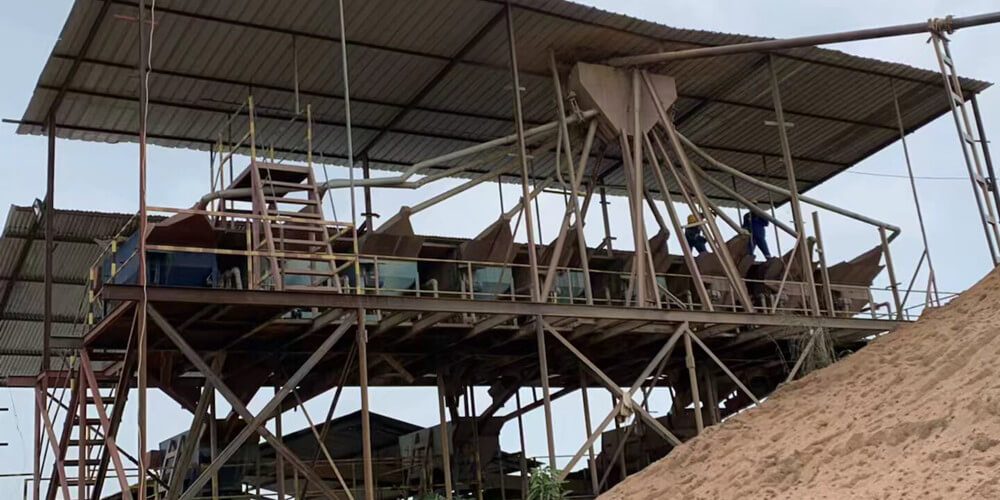
JXSC Mineral designed a complete 120TPH alluvial tin ore processing plant to help a Congo customer efficiently recover tin from alluvial deposits. The plant adopts a combination of two-stage jig separation and two-stage shaking table separation to progressively upgrade tin concentrate.
Case Study: Alluvial Tin Recovery Plant Project
Project Overview
Minerals
Placer Tin
Capacity
120 TPH
Feed Size
≤80 mm
Location
Congo
Year
2020
Project Process
Solutions & Process
Considering the customer’s raw ore characteristics, the tin particle size, and the required processing capacity, we designed a complete alluvial tin ore beneficiation plant with a capacity of 120 tons per hour.
Since the raw ore consists mainly of loose alluvial soil without sticky clay, a trommel screening and washing system is suitable for removing oversized waste materials and preparing the fine tin-bearing fraction for gravity separation.
The beneficiation system adopts four stages of gravity separation to improve tin concentrate grade while recovering valuable tin minerals efficiently.
Key Highlights of This Project
- 120TPH Processing Capacity: A complete alluvial tin processing plant designed for continuous raw ore feeding and beneficiation.
- Efficient Screening System: A vibrating feeder with an 80mm grizzly removes large waste stones, while a double-layer trommel screen separates materials to obtain the required 0–5mm feed.
- Two-Stage Jig Separation: Six sets of 4m² jig separators perform primary recovery, followed by three sets of 2 m² jig separators for further concentration.
- Two-Stage Shaking Table Separation: Six shaking tables upgrade the jig concentrates, while three additional shaking tables reprocess middlings to recover potentially lost tin.
- Chemical-Free Beneficiation: The plant uses physical separation technologies without chemical reagents, helping create a cleaner and safer working environment.
Process Flowchart

Process Design Solution
1. Raw Ore Feeding and Screening Part
- Excavators or wheel loaders feed the raw alluvial tin ore into the feeding hopper.
- The vibrating feeder evenly feeds the raw materials into the trommel screen. The feeder is equipped with an 80mm grizzly bar to remove oversized waste stones.
- A high-pressure water gun is used to disperse the raw materials and assist the washing process during feeding.
- The trommel screen adopts a double-layer screening structure. The inner screen uses a 30mm bar steel screen, while the outer screen uses a manganese steel wire mesh with 5mm openings.
- Materials larger than 5mm are screened out and transported by belt conveyor to the waste stockpile.
- The 0–5mm fine ore slurry is collected and pumped to the distributor through a sand pump, ready for the gravity separation process.
2. Primary Jig Separation Part
Equipment: 6 Sets of 4 m² Jig Separators
- The 0–5mm ore slurry from the trommel screen is pumped into the distributor.
- The distributor evenly distributes the material to six sets of 4 m² jig separators through gravity flow.
- Each 4 m² jig separator has a processing capacity of approximately 15–20 TPH.
- These six jig separators perform the primary gravity separation, recovering tin-bearing heavy minerals from the lighter gangue materials.
- The recovered concentrates are collected and transferred by gravity to the next stage of separation.
3. Fine Jig Separation Part
Equipment: 3 Sets of 2 m² Jig Separators
- The concentrates from the six primary jig separators are transferred by gravity to three sets of 2 m² jig separators.
- Each 2 m² jig separator has a processing capacity of approximately 5–10 TPH.
- These smaller jig separators perform a second-stage gravity concentration to further upgrade the tin-bearing concentrate.
- The resulting concentrates are collected and transferred to the shaking table separation system.


4. First-Stage Shaking Table Separation
Equipment: 6 Sets of Shaking Tables
- The concentrates from the three sets of fine jig separators are distributed to six shaking tables by gravity.
- Shaking tables utilize differences in mineral density, particle size, and settling behavior to achieve further separation.
- Each shaking table separates the feed into three products: tin concentrate, middlings, and tailings.
- The high-grade tin concentrate is collected as the gravity separation product.
- Middlings are collected separately and transferred to the next stage for further recovery.
- Tailings are discharged to the tailings pond.
5. Middlings Reprocessing Part
Equipment: 3 Sets of Shaking Tables
- Middlings from all six first-stage shaking tables are collected and transferred to three additional shaking tables.
- The three shaking tables reprocess the middlings to recover residual tin-bearing minerals.
- Recovered tin concentrate is added to the final concentrate product stream.
- The remaining tailings are discharged to the tailings pond.
6. Concentrate Drying
Tin concentrates collected from the shaking table circuits are naturally dried under the sun.
Ready to Build Your Alluvial Tin Processing Plant?
Main Equipment In This Project
Related Cases
We are a leading provider of innovative and efficient mining equipment and solutions. With years of experience in the industry, we specialize in designing and manufacturing high-quality machines tailored for various mineral processing needs, including gold, diamond, copper, tin, manganese, chrome, titanium, and other ore separations. Our commitment to technology and customer satisfaction drives us to deliver customized solutions that enhance productivity and ensure environmentally sustainable practices. Explore our extensive portfolio of successful case studies and discover how JXSC can transform your mining operations, helping you maximize your profitability while minimizing your ecological footprint. Choose Us—where technology meets efficiency in the world of mining!


